Blog article
What Is Dhansak? The Parsi Curry Most Takeaways Get Wrong
Published on 15 August 2026
What is Dhansak? rich Parsi curry of meat and lentils, sweet and sour at once. Explore its spices, choose your heat, and order from GB Canteen across the UK
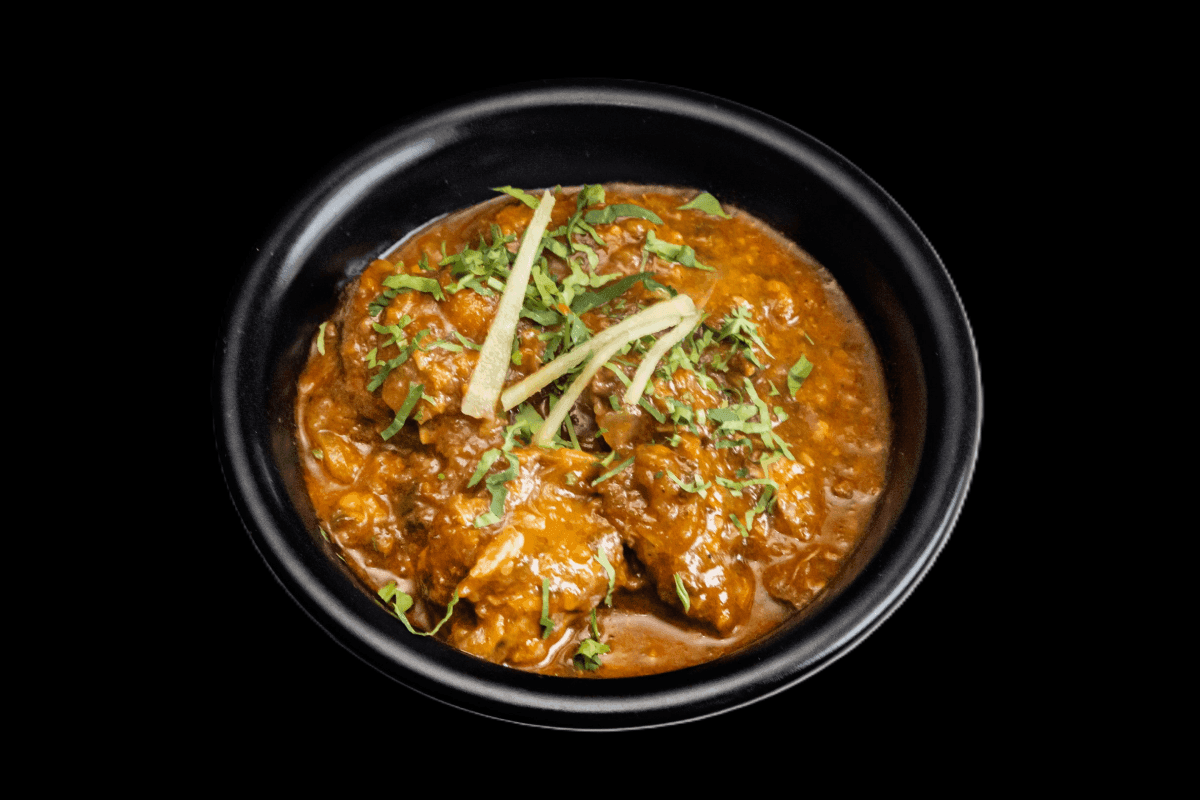
Dhansak is a Parsi curry that combines meat (usually mutton or chicken) with lentils and vegetables, cooked down into a thick, spiced sauce that hits sweet and sour and savoury all at once. It's not a dish most takeaways get right, mostly because most of them have never actually cooked one.
That last part matters more than it sounds. Half the pages you'll find explaining dhansak are recipe blogs with no real connection to where the dish comes from. Ours does; our founder's name, Bilimoria, is a Parsi surname, and our Liss kitchen runs a genuine Parsee Curries section on the menu. So before we get into the lentils and the spice mix, it's worth spending a minute on where this dish actually comes from, because that's the part everyone else skips.
Where dhansak actually comes from
Dhansak belongs to the Parsis, a community descended from Zoroastrians who left Persia over a thousand years ago and settled on the coast of Gujarat, in western India. Over the centuries, Parsi cooking blended Persian technique with Gujarati ingredients, and dhansak is arguably the clearest example of that mix still on menus today.
Even the name tells you what's in the pot. It comes from two Sanskrit words: dhānya, meaning grain, and śāka, meaning vegetables. Put together, you get something close to “grain and greens”, a fair description of a dish built around lentils long before the meat was added.
Traditionally, dhansak is a Sunday lunch dish in Parsi households, served with caramelised brown rice and a side of kachumber salad. It's also, somewhat unusually for a curry with meat in it, associated with periods of mourning rather than celebration; Parsi families often avoid non-vegetarian food on happy occasions, and dhansak's role is more everyday comfort than festive centrepiece. None of that history shows up on a standard curry house menu, and that's exactly why it's worth knowing before you order.
Where dhansak actually comes from
Dhansak belongs to the Parsis, a community descended from Zoroastrians who left Persia over a thousand years ago and settled on the coast of Gujarat, in western India. Over the centuries, Parsi cooking blended Persian technique with Gujarati ingredients, and dhansak is arguably the clearest example of that mix still on menus today.
Even the name tells you what's in the pot. It comes from two Sanskrit words: dhānya, meaning grain, and śāka, meaning vegetables. Put together, you get something close to “grain and greens”, a fair description of a dish built around lentils long before the meat was added.
Traditionally, dhansak is a Sunday lunch dish in Parsi households, served with caramelised brown rice and a side of kachumber salad. It's also somewhat unusual for a curry with meat in it to be associated with periods of mourning rather than celebration; Parsi families often avoid non-vegetarian food on happy occasions, and dhansak's role is more of everyday comfort than festive centrepiece. None of that history shows up on a standard curry house menu, and that's exactly why it's worth knowing before you order.
What's in a dhansak
At its core, dhansak is built on lentils, usually a mix of two or three varieties, such as toor dal, masoor dal and chana dal, simmered until they break down into a thick, almost porridge-like base. Vegetables go in alongside them: pumpkin, aubergine, and sometimes potato, all cooked until soft enough to disappear into the sauce rather than sit as visible chunks.
The lentils aren't just filler. They're what gives dhansak its body and its slight earthiness, and they're the reason the dish can carry a sauce this rich without feeling heavy. Meat, chicken or lamb, depending on the kitchen, is cooked separately and folded in once the lentil base is ready, along with a spice blend that typically includes cumin, coriander, garam masala and dried red chillies.
What sets dhansak apart from almost every other curry on a takeaway menu is the balance of sweet and sour running through it. A touch of jaggery or sugar rounds off the tang from tamarind or tomato, and the result is a curry that's rich, slightly sweet, gently sour, and warmly spiced, all in the same spoonful. It's a more layered flavour than most people expect from something described simply as “curry with lentils.”
How hot is a dhansak?
Dhansak sits at the mild-to-medium end of the heat scale. The chillies are there for warmth and depth rather than for the kind of heat that makes you reach for a pint of water, and the sweetness from the jaggery softens whatever spice comes through. If you've ever found a vindaloo or a madras too aggressive, dhansak is a safe, flavour-forward alternative; you get plenty going on without the burn.
That said, spice levels vary between kitchens, and if you like things hotter (or milder), just add a note to your order. Every GB Canteen kitchen can adjust to mild, medium or extra hot on request.
Chicken dhansak or lamb dhansak?
Chicken dhansak
Chicken dhansak is the lighter of the two, and it's the version most people encounter first. The chicken takes on the sweet-sour lentil sauce well without dominating it, which makes this a good entry point if you've never tried dhansak before and aren't sure what to expect.
Lamb dhansak
Lamb dhansak is the more traditional version, and arguably the better one if you want to understand what the dish is actually meant to taste like. The lamb needs longer, slower cooking, which gives it time to properly absorb the lentil base and the spice mix. It's richer, a little heavier, and closer to how dhansak is cooked in Parsi homes.
Either way, get it with the caramelised brown rice if the kitchen offers it; the slight sweetness of the rice plays off the sourness of the sauce, and it's how the dish is meant to be eaten.
Patia, dhansak's sharper cousin
If dhansak is the comforting, rounded version of sweet-and-sour, patia is its sharper, punchier relative. Also a Parsi dish, chicken patia leans harder into the sour side of the equation, usually with more tamarind and a noticeably hotter chilli profile than dhansak.
Where dhansak is built around lentils, patia is a thinner, tomato-forward sauce with a sharper bite.
If you're choosing between the two, and you like a curry that fights back a bit, go for patia. If you want something rounder and more comforting, dhansak is the one.
How we cook dhansak at GB Canteen
Dhansak isn't a dish we've bolted onto a generic curry menu because it does well on Google. It's on our menu because of who we are; Bilimoria is a Parsi name, and dhansak is, in a sense, a family dish before it's a business one. You'll find it on our Parsee Curries menu at our Liss kitchen, cooked the way it's meant to be, slow-simmered lentils, properly reduced, meat added at the right point rather than thrown in at the start.
It's also on the menu at our Eastleigh kitchen, where it's one of the dishes regulars come back for specifically.
Like everything we cook, it's made fresh to order in our own kitchens, not reheated from a batch cooked hours earlier. And these days, ordering it is simpler than it used to be. We've moved away from third-party platforms like Uber Eats, Deliveroo and Just Eat; every GB Canteen order now comes straight through us, either via our website or our app. It means the food gets to you faster, the pricing is more transparent, and we've been able to bring our delivery riders in-house too, so the person handing over your dhansak is part of the same team that cooked it. If you order from us regularly, downloading the app is worth it purely for how much quicker reordering becomes.
Common questions about dhansak
What is dhansak?
Dhansak is a Parsi curry made with meat, lentils and vegetables, cooked together into a thick sauce that's sweet, sour and savoury at the same time. It's typically served with caramelised brown rice.
Is dhansak hot?
No, dhansak is mild to medium. The chillies add warmth rather than heat, and the sweetness from the jaggery balances out most of the spice.
What is the difference between dhansak and patia?
Dhansak is a thicker, lentil-based curry that's rounded and comforting. Patia is thinner, more tomato-based, and noticeably sharper and hotter, with a stronger tamarind sourness.
Is dhansak sweet?
It's sweet-and-sour rather than straightforwardly sweet. Jaggery or sugar balances the tang from tamarind or tomato, so you get sweetness, sourness and spice together rather than any one flavour dominating.
What meat goes in a dhansak?
Chicken and lamb (or mutton, in the traditional version) are the most common choices. Chicken dhansak is lighter and milder; lamb dhansak is richer and takes longer to cook.
Does dhansak contain lentils?
Yes, lentils are the base of the dish, not an add-in. A mix of two or three varieties is simmered down until they form a thick, hearty sauce, which is then combined with the meat and spices.
Craving one now? Find your nearest GB Canteen kitchen or download our app for faster ordering, live tracking, and exclusive offers- no third-party platforms, just us.